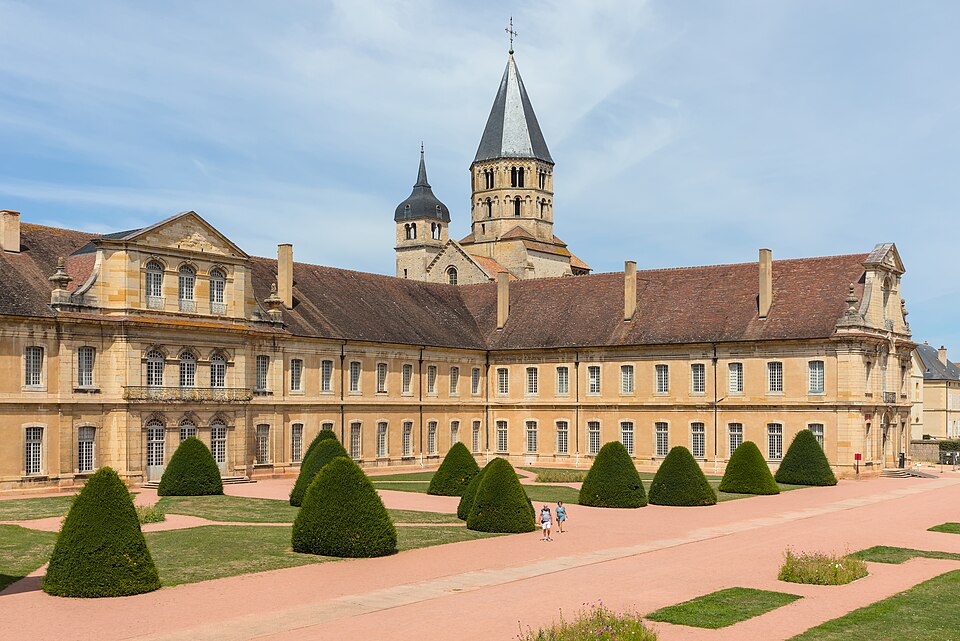
Abbaye de Cluny
Cluny Abbey (French: [klyni]; French: Abbaye de Cluny, formerly also Cluni or Clugny; Latin: Abbatia Cluniacensis) is a former Benedictine monastery in Cluny, Saône-et-Loire, France. It was dedicated to Saints Peter and Paul. The abbey was the originating point of Cluniac Reforms and controlled a large network of monasteries throughout the Western Europe, sometimes referred to as the Cluniac Order.
🎟️ Book tickets for Abbaye de ClunyTickets by Tiqets: instant confirmation, on your phone. Partner link: booking here supports Vaut le Détour at no extra cost.
Key facts
- Created
- 2/9/909
- Listed as
- classified historical monument (1862)
- Style
- Romanesque architecture
- Location
- Cluny
- Official website
- www.cluny-abbaye.fr/en
What to know
The abbey was constructed in the Romanesque architectural style, with three churches built in succession from the 10th to the early 12th centuries. The last basilica was the world's largest church until the construction of St. Peter's Basilica in Rome.
Cluny was founded by Duke William I of Aquitaine in 910. He nominated Berno as the first abbot of Cluny, subject only to Pope Sergius III. The abbey was notable for its stricter adherence to the Rule of St. Benedict, whereby Cluny became acknowledged as the leader of western monasticism. In 1790 during the French Revolution, the abbey was sacked and mostly destroyed, with only a small part surviving.
Starting around 1334, the Abbots of Cluny maintained a townhouse in Paris known as the Hôtel de Cluny, which has been a public museum since 1843. Apart from the name, and the building itself, it no longer possesses anything originally connected with Cluny.
On your route
Driving through France or Belgium? Vaut le Détour places this stop on your itinerary with your real arrival time, a lunch spot open at that hour, and fuel or charging.
Nearby
- abbaye Saint-Philibert de Tournus, 24.0 km away
- abbaye de La Ferté, 32.4 km away
- cathédrale Vieux-Saint-Vincent, 19.6 km away
- château de la Clayette, 31.4 km away
- château de Berzé, 6.0 km away
- château de Nobles, 15.3 km away
- château de Balleure, 19.3 km away
- château de Pierreclos, 11.8 km away
Frequently asked questions
- What is there to see near Abbaye de Cluny?
- Nearby: abbaye Saint-Philibert de Tournus (24.0 km), abbaye de La Ferté (32.4 km), cathédrale Vieux-Saint-Vincent (19.6 km), château de la Clayette (31.4 km). Each one can become a detour on your route.
- How do I buy tickets for Abbaye de Cluny?
- Tickets for Abbaye de Cluny are sold online (Tiqets ticketing, instant confirmation, tickets on your phone). The booking link is on this page.
- When was Abbaye de Cluny created?
- Wikidata gives 2/9/909 as its date of creation or foundation.
- Is Abbaye de Cluny a protected monument?
- Yes: classified historical monument (1862) (source: Wikidata).
Facts and key figures: the Wikipedia article “Cluny Abbey” (CC BY-SA 4.0) and Wikidata (CC0), retrieved on 2026-08-05. Opening hours and prices are deliberately left out: they change too fast to be reliable anywhere but the official website.